Christmas Traditions in the Philippines: A Celebration Like No Other in PH
The Philippines is renowned for its vibrant and joyous Christmas celebrations, which begin as early as September 1st. This unique tradition, often referred to as the “ber months,” sets the stage for one of the longest Christmas seasons in the world. Here’s a closer look at why Filipinos start their Christmas traditions so early and what makes these celebrations special.
The Ber Months: A Cultural Phenomenon
As soon as the calendar turns to September, Filipinos begin decorating their homes with Christmas lights, putting up parols (traditional lanterns), and playing festive music. This early start is a reflection of the Filipino spirit, where the anticipation of Christmas brings joy and excitement.
Significance of 1st September
- The transition into the “ber months” marks the beginning of the Christmas season for many Filipinos.
- This period is not just about the holiday itself; it’s a time for families to come together and prepare for the festivities.
A Time of Family and Community
- The “ber months” foster a sense of unity and belonging, essential values in Filipino culture.
- It’s a season filled with gatherings, shared meals, and community events that strengthen bonds among loved ones.
Festive Traditions and Practices
Simbang Gabi
One of the most cherished traditions is the “Simbang Gabi,” a series of nine dawn masses leading up to Christmas Eve. This practice is deeply rooted in faith and is a time for reflection and community bonding.
- Culinary Delights: After attending mass, many families indulge in traditional Filipino delicacies sold by street vendors, such as bibingka (rice cake) and puto bumbong (purple rice cake).
Noche Buena
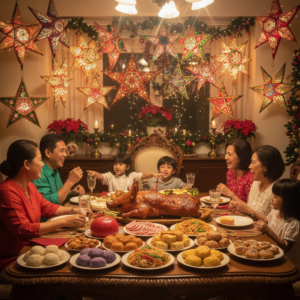
On Christmas Eve, families gather for “Noche Buena,” a festive meal that includes a variety of traditional dishes. It’s a time to celebrate together, share stories, and enjoy each other’s company. Typical dishes served during Noche Buena include:
- Lechon (roasted pig)
- Hamón (Christmas ham)
- Queso de Bola (edam cheese)
- Pancit (noodles for long life)
- Bibingka and puto bumbong (rice cakes)
- Fruitcake and kakanin (native delicacies)
Parols and Decorations
The iconic parol symbolizes the Star of Bethlehem and is a staple in Filipino homes during the Christmas season. The colorful lanterns light up streets and neighbourhoods, creating a festive atmosphere.
- Creative Expressions: Many families take pride in creating elaborate parols, showcasing their creativity and craftsmanship. Some parols can be quite large, and competitions are held to see who can craft the most beautiful one.
Unique Aspects of Filipino Christmas Celebrations
Community Events and Street Parties
- In many areas, Christmas is celebrated with lively street parties, known as “paskuhan,” where communities come together to enjoy food, music, and dance.
- Local government units often organize Christmas festivals, complete with parades, concerts, and fireworks, allowing everyone to join in the festive spirit.
The Role of Music
- Christmas carols play a significant role in Filipino celebrations. Groups of carolers often go from house to house, singing traditional Christmas songs, and spreading joy.
- Popular songs include “Ang Pasko Ay Sumapit” and “Pasko Na Naman,” which capture the essence of Filipino Christmas spirit.
- In recent years, modern Filipino artists have created pop Christmas songs that have become favorites during the season.
Gift-Giving and “Aguinaldo”
- Gift-giving is an integral part of the Filipino Christmas experience. Children often receive “aguinaldo,” or gifts, from their godparents and relatives, which can include money, toys, or clothing.
- This practice emphasizes the importance of family ties and the joy of giving.
Regional Variations
Celebrations in Manila
- Metro Manila transforms into a festive wonderland during the Christmas season, with major thoroughfares adorned with dazzling lights and decorations. Malls and commercial centres host elaborate events, concerts, and Christmas markets.
- Intramuros, the historic district of Manila, features beautiful light displays and traditional Christmas events, including special masses at the San Agustin Church.
- Many families in Manila also partake in community outreach programs, distributing food and gifts to the less fortunate, reinforcing the spirit of giving.
Christmas in North Luzon
- In North Luzon, particularly in provinces like Pangasinan and La Union, local customs blend indigenous traditions with Christian beliefs.
- The Pangasinan region is known for its “Paskuhan sa Bayambang,” a festival that showcases local talents through cultural performances and displays.
- In Baguio City, the “Panagbenga Festival” (Flower Festival) often coincides with the Christmas season, featuring colorful floral floats and street dancing that attract both locals and tourists alike.
Christmas in the Visayas
- The Visayas region, particularly in Cebu, is famous for its vibrant Christmas celebrations. The “Cebu Christmas Festival” features grand displays, street parties, and the iconic “Simbang Gabi,” attracting thousands of visitors.
- Iloilo City also celebrates with its unique “Parade of Lights,” where participants showcase beautifully decorated floats and street dancing that highlight the rich cultural heritage of the region.
- Local Delicacies: In the Visayas, traditional foods such as bibingka and puto bumbong are popular, along with local specialties like empanada and kakanin.
Christmas in Mindanao
- In Mindanao, Christmas celebrations often incorporate diverse cultural influences from indigenous peoples and Muslim communities.
- In Davao City, the “Kadayawan Festival” is celebrated close to Christmas, showcasing the region’s rich cultural heritage through parades, street dancing, and floral displays.
- Zamboanga City is known for its colorful “Fiesta Pilar,” which includes a Christmas-themed festival featuring traditional dances, food fairs, and community gatherings.
- Acts of Charity: Many communities in Mindanao engage in charitable activities during Christmas, emphasizing the importance of helping those in need.
The Spirit of Giving and Joy
The early onset of Christmas in the Philippines is not just about decorations and festivities; it embodies the spirit of giving and love. Filipinos prioritize family, community, and faith, making the holiday season a time of generosity and goodwill.
Acts of Kindness
- Many Filipinos engage in charitable acts during the Christmas season, such as giving to the less fortunate, providing meals to those in need, and participating in community outreach programs. This reflects the true essence of Christmas as a time of sharing and compassion.
In conclusion, the Christmas traditions in the Philippines are a beautiful blend of cultural heritage, religious significance, and community spirit. By starting the celebrations in September, Filipinos embrace the joy of the season, making it a truly special time of year.
Whether it’s through the warmth of family gatherings, the beauty of parols lighting up the night, or the melodies of carolers spreading cheer, the Filipino Christmas is a unique celebration that captivates the hearts of many.